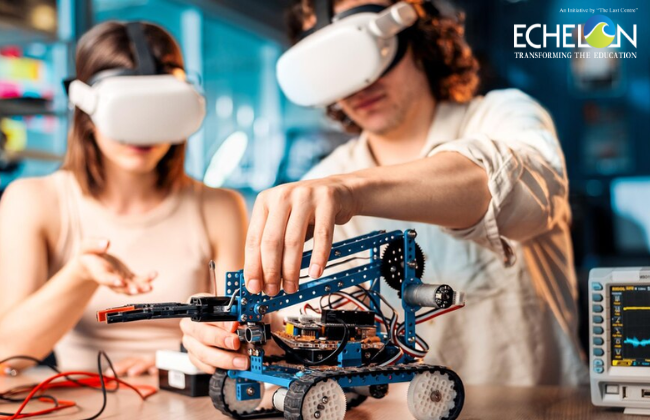
 Imagine a world where machines learn, adapt, and work alongside humans. This isn’t science fiction—it’s the present, and it’s being built by robotics engineers. If you’re captivated by the idea of creating intelligent machines and automated systems, a Bachelor of Technology in Robotics and Automation is your gateway. For students in Delhi and the National Capital Region, securing a seat through Guru Gobind Singh Indraprastha University (IPU or GGSIPU) is a respected and strategic choice. This comprehensive blog serves as your personal guide to understanding the BTech Robotics IPU admission process, with a close look at the dynamic program offered at Echelon Institute of Technology in Faridabad.
What Exactly is a BTech in Robotics and Automation?
Before diving into admissions, let’s clarify the field. This engineering discipline is a vibrant fusion of several core technologies. It integrates principles from mechanical design, electronic systems, computer programming, and intelligent control theory. The goal is to educate future engineers who can conceptualize, build, and manage robotic systems and smart automation solutions. Your studies will cover diverse areas including digital electronics, microprocessors, sensor integration, programming logic, and artificial intelligence fundamentals. This degree is designed for hands-on creators and problem-solvers ready to tackle real-world challenges.
The Advantage of an IPU-Affiliated Engineering Degree
Choosing Guru Gobind Singh Indraprastha University for your technical education offers significant benefits. As a established state university, IPU is recognized for its structured academic framework and industry-aligned programs. A degree from an IPU-affiliated college carries credibility with employers across the country. The university’s common entrance test and centralized counseling ensure a transparent and merit-based admission process. By joining a trusted institute like Echelon Institute of Technology, you gain the assurance of a standardized curriculum complemented by the college’s specialized focus and modern training facilities.
A Clear Roadmap: The IPU Admission Procedure for Engineering
The primary entry point for the BTech program is the IPU CET, the university’s common entrance test. Here is a straightforward breakdown of the steps involved.
Step 1: Meeting the Eligibility Requirements
Candidates must have successfully completed their Class 12 or equivalent examination from a recognized board. The key subject requirement is a combination of Physics, Chemistry, and Mathematics. A minimum aggregate score is required, typically around 55 percent, with applicable relaxations for students belonging to reserved categories as per university norms.
Step 2: Excelling in the IPU CET Examination
Your performance in this entrance test is crucial. The exam generally assesses your understanding and application of concepts from Physics, Chemistry, and Mathematics at the senior secondary level. Dedicated preparation to achieve a strong rank will open more opportunities during college selection.
Step 3: The Centralized Counseling and College Choice
After the results are announced, IPU conducts online counseling rounds based on candidates’ ranks. This is the most critical phase where you actively participate. You will be able to list your preferred choices of institute and academic branch. To pursue robotics at EIT, you must select Echelon Institute of Technology, Faridabad and the BTech in Robotics and Automation program when your turn arrives.
Step 4: Finalizing Your Admission
Once a seat is provisionally allotted, you must complete the required document verification and pay the academic fees within the stipulated deadline to confirm your admission.
Important Note: Admission guidelines and schedules can be updated. It is essential to regularly check the official IPU website for the latest admission brochure and news updates.
Echelon Institute of Technology: Building the Robotics Engineers of Tomorrow
Within the network of IPU institutions, Echelon Institute of Technology (EIT) in Faridabad has developed a strong reputation for its forward-thinking approach, particularly in advanced fields like robotics engineering. Let’s explore what makes this campus a compelling destination for aspiring engineers.
-
Industry-Relevant Academic Plan: The program structure is thoughtfully designed to bridge classroom learning with professional expectations. It incorporates essential topics in automation, mechatronics, and system design, preparing students for the evolving technological landscape.
-
Learning by Doing: Modern Labs and Workshops: The institute houses specialized laboratories for robotics, embedded systems, and industrial automation. Students gain priceless hands-on experience by working with actual hardware, controllers, and simulation software, translating theory into tangible practice.
-
Guidance from Experienced Mentors: The faculty comprises both seasoned academicians and professionals with industry background. This blend ensures students receive not only theoretical knowledge but also practical insights and career mentorship.
-
A Culture of Innovation and Projects: From the early years of study, students are encouraged to engage in project-based learning. This progression from basic models to sophisticated robotic projects helps in building a robust portfolio, a key asset for future careers or higher studies.
-
Strong Industry Links and Career Support: Situated in a major industrial center, the institute actively cultivates relationships with companies in automation, manufacturing, and related sectors. These connections facilitate internship opportunities and have established a consistent record of positive placement outcomes for graduates.
Where Can a Robotics Engineering Degree Take You?
The career prospects after completing this program are diverse and promising. Robotics engineers are in growing demand across multiple sectors. Potential professional paths include:
-
Robotics System Designer: Develop and engineer robotic mechanisms and platforms.
-
Automation Specialist: Implement and optimize automated processes in factories, warehouses, and supply chains.
-
Control and Software Engineer: Program and refine the software and control logic that operates robotic devices.
-
Application Engineer: Provide technical expertise to integrate robotic solutions in client environments.
-
Research and Development Professional: Contribute to pioneering new applications in corporate research labs or academic settings.
-
Key Industries: Graduates find opportunities in automotive companies, aerospace firms, healthcare technology (for assistive and surgical devices), consumer electronics, agriculture technology, and defense.
Preparing for Your Success in Robotics Engineering
To make the most of this demanding yet rewarding field, prospective students can start building a strong foundation. Strengthening your core understanding of physics and mathematics is always beneficial. Cultivate a curious mindset about technology and machinery. Familiarizing yourself with basic computer programming concepts can provide an early advantage. Ultimately, selecting an institute that offers the right mix of theory, practical exposure, and industry interaction is vital for a successful educational journey.
Conclusion
Embarking on a BTech in Robotics and Automation through the IPU admission channel is a decisive move toward a career shaping the future. It combines the value of a recognized university degree with the specialized, application-oriented training this field demands. Echelon Institute of Technology, Faridabad, provides an environment where innovation is nurtured, and students are equipped to become competent, confident engineers ready to contribute to the world of intelligent machines.
Your journey to becoming a creator of tomorrow’s technology starts with informed planning today. We wish you all the very best as you take this important step forward.
